Fresh, Frozen or Canned Peas: What Actually Changes?
Fresh, frozen or canned peas suit different meals. Compare their texture, convenience and cooking behavior to choose the form that fits your dish.
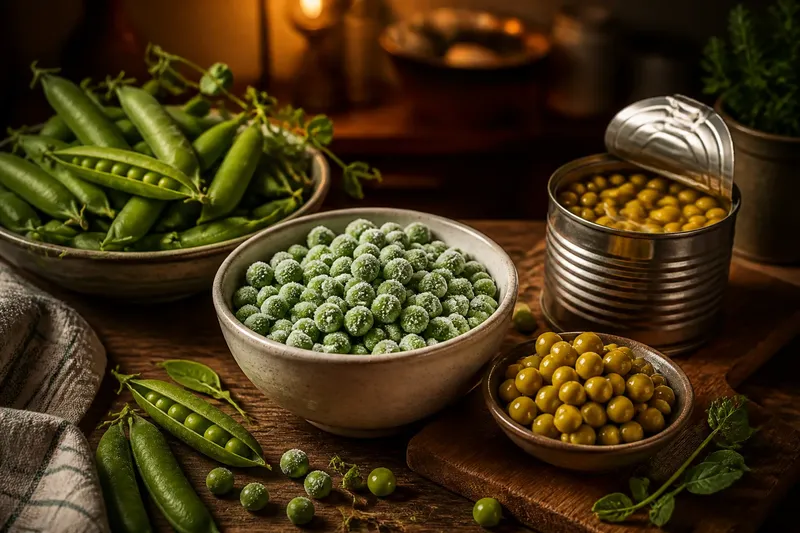
Fresh, frozen or canned peas: which should you buy for tonight’s meal? Start with the dish, not an assumption that one form is always best. Peas change in texture, preparation and how readily they take on other flavors, so the right choice depends on what you want them to do.
Choose fresh peas when their brief season suits the meal
Fresh peas arrive in pods, and the shelling is part of the bargain. Their appeal is a clean, sweet flavor and a tender bite when the peas are young and cooked briefly. They suit dishes where peas remain distinct: a spring salad, a simple side with butter and herbs, or a quick stir into risotto near the end of cooking.
Freshness matters more than the label alone. Look for pods that feel firm and look crisp rather than limp or dried at the seams. Once shelled, peas are perishable; use them soon, and avoid leaving them sitting in a warm kitchen while you prepare the rest of dinner. Older or larger peas can taste starchy and feel tougher, so they may be better in soup, where the texture can soften into the dish.
Choose fresh peas when you have access to good-looking pods, time to shell them, and a recipe that benefits from their delicate bite. If the meal depends on peas being especially tender, inspect a few before committing the whole batch. A quick taste after cooking tells you whether they need a little more time or are ready to serve.
Choose frozen peas for weeknight speed and a distinct bite
Frozen peas are already shelled and commonly frozen soon after harvest. They are convenient to keep on hand, and their texture often holds up well when added near the end of cooking. For many everyday dishes, they offer a useful middle ground: more structure than canned peas, without the work of shelling.
Add frozen peas straight from the freezer to soups, stews, pasta, fried rice or a pan of vegetables. Give them enough time to heat through, but avoid simmering them for a long stretch if you want them to remain intact. For a cold salad, thaw them in a colander and drain thoroughly; excess water can dilute dressing and make other ingredients feel damp.
Frozen peas work especially well when the recipe calls for a bright green accent rather than a fully softened ingredient. They can still lose their fresh, springy character if cooked too long, and they may release a little moisture into a dish. If a skillet is already crowded, add them when there is room for the extra liquid to evaporate rather than expecting them to brown like a dry vegetable.
Choose canned peas when softness and immediate readiness help
Canned peas are cooked and packed in liquid, so they are ready to warm and tend to be softer than fresh or frozen peas. That texture is not a defect when the dish calls for tenderness. They fit well in a quick soup, a casserole, a soft filling or a meal where peas blend into a spoonful rather than stand apart.
Drain canned peas before adding them to most recipes. If their flavor seems too salty or the packing liquid tastes strong, a rinse can help; check the label when sodium is a concern. Heat them gently and briefly, since prolonged cooking can turn an already tender pea mushy. Fold them into a dish near the end, or serve them warmed with a little butter, black pepper and chopped parsley.
Canned peas are a practical choice when there is no time to thaw or shell anything, or when a softer texture suits the meal. They are less suited to recipes that rely on crisp definition, such as a fresh-tasting salad or a quick sauté where each pea should hold its shape.
Match the pea to the job in the recipe
- For a salad with a firm, fresh bite: Choose young fresh peas when available, or thawed frozen peas. Drain thawed peas well before dressing them.
- For soup or stew: Use frozen peas for recognizable pieces added near the end. Choose canned peas when a softer, more integrated texture is welcome.
- For a quick side dish: Frozen peas are convenient and need only gentle heating. Canned peas suit a softer side; drain them first and warm them briefly.
- For a dish where peas are the main feature: Fresh peas can bring a delicate sweetness and a sense of season, provided the pods look crisp and the peas are tender.
- For a recipe with a long cooking time: Add frozen or canned peas late if you want them whole. If the recipe expects them to break down, earlier addition may make sense.
Say you are making a quick pasta with lemon, spinach and peas, but have no time to shell a bag of pods. Frozen peas added to the boiling pasta near the end would heat through while retaining more shape than canned peas. If you wanted the peas to melt into a soft sauce instead, drained canned peas stirred in gently could fit better.
How do fresh, frozen and canned peas differ?
Which peas keep their shape best?
Fresh peas and frozen peas generally suit dishes where separate, tender pieces matter. Canned peas are already cooked and usually softer, so they are more likely to compress when stirred vigorously.
Do frozen peas need to thaw before cooking?
Usually not for hot dishes such as soups, pasta or stir-fries; add them directly and allow them to heat through. For cold dishes, thaw them first and drain away the moisture.
Should canned peas be rinsed?
Rinsing is optional. Drain them as a default, then rinse if you want to reduce the taste of the packing liquid or if the label and your preferences make that useful.
Can one form replace another in a recipe?
Often, but account for texture and cooking time rather than swapping blindly. Use canned peas later and more gently than a recipe’s fresh or frozen peas, and avoid long cooking for any form you want to keep intact.
Let texture, not status, settle the choice
Fresh, frozen or canned peas each have a place: fresh for a seasonal, delicate bite; frozen for ready access and a distinct texture; canned for softness and immediate use. Decide whether the peas should remain separate, blend into the food or simply make dinner easier. That one question usually narrows the choice.
When a recipe gives specific directions, follow its timing and account for the form you have; package guidance can also help. For the next meal, choose fresh, frozen or canned peas by the texture you want at the table, not by which option sounds most virtuous.