A Pantry Shelf for a Week of Unplanned Suppers
Build a pantry shelf for unplanned suppers with adaptable staples, simple pairings, and a clear way to choose what to cook when time or appetite shifts.
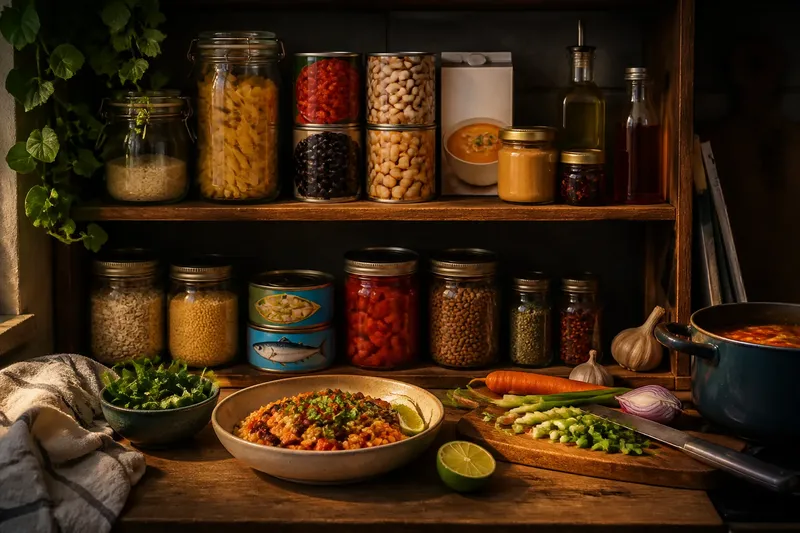
What can you cook tonight when you have not planned dinner, your appetite has changed, and the cupboard looks like a collection of unrelated packets? A pantry shelf for unplanned suppers works best when its ingredients can meet in several ways, rather than when it tries to predict a particular menu. Keep a small group of staples visible, pair them with whatever is fresh, and let time and appetite decide how they come together.
The aim is not to make every dinner from shelf-stable food. It is to keep a few reliable starting points on hand: grains, pasta, beans, tomatoes, broth, and flavorings that can shift between a bowl, a soup, or a quick skillet meal. The shelf should make choices easier, not turn improvisation into another chore.
Start with parts that can change roles
Choose ingredients by the jobs they can do. Rice, couscous, oats, pasta, and tortillas provide a base, but they do not all suit the same evening. Rice can anchor a warm bowl or thicken a soup. Pasta can carry a sauce, while canned white beans can become the center of a meal or disappear into a broth. Canned tomatoes add body to beans, pasta, and soups; coconut milk can soften a spicy mixture or make a quick stew feel fuller.
For a compact shelf, consider keeping:
- One grain, such as rice or couscous, and one pasta shape.
- One or two canned beans or lentils, chosen in forms you enjoy.
- Canned tomatoes and broth or bouillon for liquid and body.
- Cooking oil, vinegar, and a familiar seasoning blend or dried herbs.
- A jar of something concentrated, such as mustard, curry paste, or chili crisp.
- A flexible extra, such as coconut milk, peanut butter, or canned fish.
This is a menu of roles, not a shopping quota. If you already keep lentils and noodles, there may be no reason to add another grain. Check package directions and manufacturer guidance for storage, and follow local food-safety advice where it applies.
When the shelf is full but dinner still feels impossible
A crowded cupboard can make cooking harder if the ingredients do not suggest a path. The usual cause is buying appealing items one at a time: an unusual grain, a specialty sauce, or several cans intended for meals that never arrive. The fix is to look for connections before adding anything else.
Take one base, one filling ingredient, and one flavor direction. Rice, beans, and tomatoes lean toward a hearty bowl; pasta, white beans, and broth can become a loose soup; couscous, chickpeas, and lemon or vinegar make a brighter plate. These are starting combinations, not fixed recipes. A fresh onion, a handful of greens, or leftover roasted vegetables can join when available.
Say you have rice, canned black beans, tomatoes, and a lime, but no planned meal. If you want something warm and substantial, simmer the beans with tomatoes and seasoning while the rice cooks, then finish with lime. If the evening feels too warm for a hot bowl, season the beans and tomatoes more lightly and serve them with rice at room temperature, with any crisp vegetable on hand. The same shelf supports two different appetites without requiring a new set of ingredients.
When the clock is tighter than expected
Long cooking times are often the hidden cost of a pantry plan. Dry beans, whole grains, and recipes with several separate components may be economical or satisfying, but they do not help much when dinner needs to happen soon. Keep at least one quick-cooking base and one ready-to-use protein or filling item.
Couscous, quick-cooking noodles, canned beans, and canned fish can shorten the route from cupboard to plate. Use broth or bouillon to give a simple soup more character, or stir mustard and vinegar into beans for a sharp, no-simmer option. If a recipe calls for an ingredient that needs soaking or lengthy cooking, choose a canned counterpart or save that dish for a night with more time.
It also helps to notice the work hidden in a package. Rice may require more time than couscous; a whole can of tomatoes may call for a longer simmer than a spoonful of concentrated paste. Choose by the time you actually have, not the time you wish you had.
When the same staples start to taste alike
Repetition often comes from relying on one flavoring pattern, not from having too few ingredients. Beans, grains, and pasta can feel interchangeable if every meal gets the same dried herbs and bottled sauce. Keep a few distinct flavor directions within reach, then use small amounts to change the character of a familiar base.
For a savory, rounded direction, use garlic, dried oregano, and tomatoes. For a tangy one, finish beans or grains with vinegar, mustard, or citrus. For warmth, use curry paste or chili flakes; for a nutty, rich note, stir peanut butter into a broth or sauce. You do not need every option. A few flavorings that suit your household can make the same rice and beans feel different without requiring a new recipe each night.
Fresh additions can do similar work. A scallion, a grated carrot, a handful of spinach, or a spoonful of yogurt can change texture and contrast. Treat these as optional companions rather than essential pantry items, so a missed shopping trip does not derail dinner.
When ingredients are bought but not used
Unplanned suppers fail quietly when food slips to the back of a shelf. A specialty jar opened for one dish may linger, while the everyday basics run out. Arrange ingredients so the most adaptable items are easiest to see and the less familiar ones are grouped beside something they complement.
Put open packages in clear containers or clip them closed, and keep a short note on the cupboard door for items that need replacing. Before shopping, check the shelf and plan around what is already open. If a sauce has been sitting unused, choose one simple pairing for it or decide not to buy it again. The goal is a shelf that reflects what you cook, not an imagined version of your habits.
Use a first-in, first-out routine: bring older cans and packages forward when new ones arrive. This is especially useful for ingredients with a best-before date or storage directions. A quick glance before cooking can also reveal that a nearly empty bag of pasta is better suited to soup than to a full pasta dinner.
How do you choose a pantry base?
Should you keep rice or pasta?
Keep whichever you reach for more often, then add a second base only if it serves a different kind of meal. Rice suits bowls and soups, while pasta can make a quick one-pot meal or a cold salad.
Are canned beans better than dried beans for flexible dinners?
Canned beans are ready to use and fit short evenings; dried beans take more planning but may suit a routine that includes batch cooking. Choose the form that matches your actual schedule and the way you like to cook.
What can replace a missing recipe ingredient?
Replace by role rather than by name: use another grain for the base, a different bean for a filling element, or broth and tomatoes for moisture. If the missing ingredient defines the dish’s main flavor, choose a different meal rather than forcing a poor substitute.
How many staples should one shelf hold?
There is no useful universal number. Keep enough variety to support a few different meal shapes, while leaving space to see what is there and use it before buying more.
Let appetite choose the meal shape
On a tired evening, a one-pot soup may be easier to face than a composed bowl. On another night, the same ingredients might suit a cold grain salad or a simple pasta dish. Decide first whether you want something brothy, saucy, crisp, or filling; then choose the pantry combination that fits. This order keeps a short list of staples from dictating the same dinner every time.
A pantry shelf for unplanned suppers is useful when it leaves room for change. Keep ingredients that overlap in purpose, make the quick options easy to spot, and let a fresh addition or a different seasoning provide variety. Before replacing a staple, ask whether it helps you make a meal you actually want. That question keeps the shelf practical—and makes the next unplanned evening easier to answer.